
How USDA eligibility maps actually work
The USDA Rural Development program defines "rural" using a combination of population thresholds and Census data. When an area's population crosses 35,000 — or when it gets absorbed into a larger Metropolitan Statistical Area — USDA can reclassify it as ineligible.
Map reviews don't happen on a fixed schedule. They're triggered by decennial Census releases and periodic administrative reviews. Importantly, the USDA typically provides a transition period after reclassification: buyers who are under contract before the effective date usually keep their eligibility. But that window can close fast — sometimes 30 days.
The practical takeaway: once a town is flagged and the review clock starts, the safest move is to get under contract before the deadline, not after.
The three towns to watch in North Texas
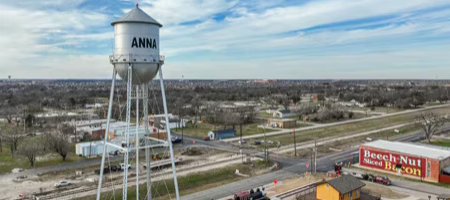
Anna (Collin County) — Anna's population has roughly doubled since 2020, driven by master-planned developments along US-75. Collin County as a whole is one of the fastest-growing counties in the United States. Anna currently qualifies, but its growth trajectory puts it squarely in the category of towns USDA reviewers watch.
Melissa (Collin County) — Adjacent to Anna along the US-75 corridor, Melissa has seen explosive single-family permit activity since 2022. Its award-winning school district makes it a natural draw for exactly the family demographic that USDA targets. That popularity is its greatest risk factor for eventual reclassification.
Princeton (Collin County) — Princeton sits on US-380, one of the most active commercial corridors in North Texas. New residential developments have brought hundreds of new homes since 2023. It currently qualifies, but its proximity to McKinney (already ineligible) and its growth rate mean it warrants a watch.
Towns that are safe for now
Royse City, Fate, Terrell, Caddo Mills, Farmersville, Greenville, Quinlan, and Lavon are not currently showing the population pressures that trigger reviews. Hunt County towns in particular — Greenville, Quinlan, Caddo Mills — have the most stable eligibility outlook.
Wylie's core already lost eligibility — only rural parcels on the outskirts remain (requiring a parcel-level check). Terrell and Royse City are growing but remain well within USDA's rural thresholds at current growth rates.
What buyers in growth-flagged towns should do
First: verify your specific address is eligible right now using the USDA eligibility tool (eligibility.sc.egov.usda.gov). Eligibility is parcel-level, not city-level — a house on the edge of Anna may qualify when one in the center doesn't.
Second: if you're seriously considering a home in Anna, Melissa, or Princeton, don't wait for market conditions to get better. The eligibility risk is real, and losing USDA financing means losing the $0 down advantage entirely. FHA requires 3.5% down; conventional requires 3–20%.
Third: get pre-approved now, even if you're not ready to buy this month. Pre-approval gives you the ability to move fast when the right house comes up — and in markets where USDA eligibility may close, speed matters.
When is the next Map Watch post?
I'll publish a North Texas USDA Map Watch post each quarter — whenever there's a material change to eligibility maps, new Census data, or USDA administrative updates that affect North Texas buyers. If you're on the email list, you'll get it the day it publishes.